
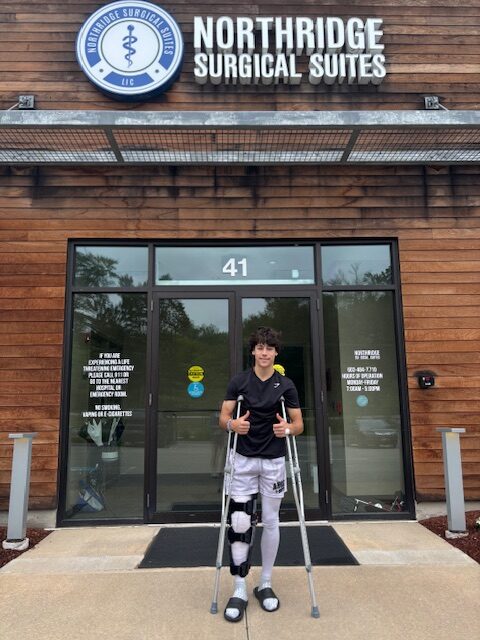
We’d like to introduce you to Hunter Fitzgerald – son of the owners of Fitzgerald PT. He’s an amazing athlete and depending on the season, can be found out on the soccer field, basketball court, LAX field or in one of our clinics. Hunter is 15 years old and heading into his sophomore year at Austin Prep.
When Hunter went down during a recent soccer match, it wasn’t your typical non-contact ACL tear. This time, it was a contact injury—a goalie jumped up and came down hard on his knee, resulting in an ACL rupture. While many ACL injuries occur without contact and can often be mitigated through prevention programs, traumatic injuries like Hunter’s are a different story—sudden, unpredictable, and not truly preventable.
But even though this wasn’t preventable, what happens next is what matters most.
Understanding ACL Reconstruction & Recovery
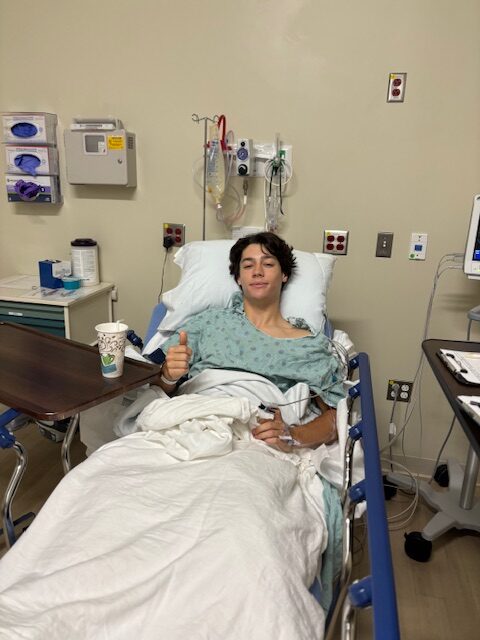
Hunter underwent ACL reconstruction surgery using a quadriceps tendon graft—a strong option with its own specific rehabilitation timeline. Surgery was performed by Dr. Czarnecki on June 6th, and impressively, Hunter was up and walking with crutches and a brace the very same day.
The first week post-op is focused on:
- Ice and swelling control
- Continuous Passive Motion (CPM) machine
- Gait training and safe mobility
- Home exercise initiation
Hunter returned to see his surgeon 10 days post-op and, importantly, started physical therapy just 3 days after surgery. Why? Because early PT is critical for pain control, swelling management, restoring range of motion, and activating muscles that shut down during injury and surgery.
Progressing Through PT
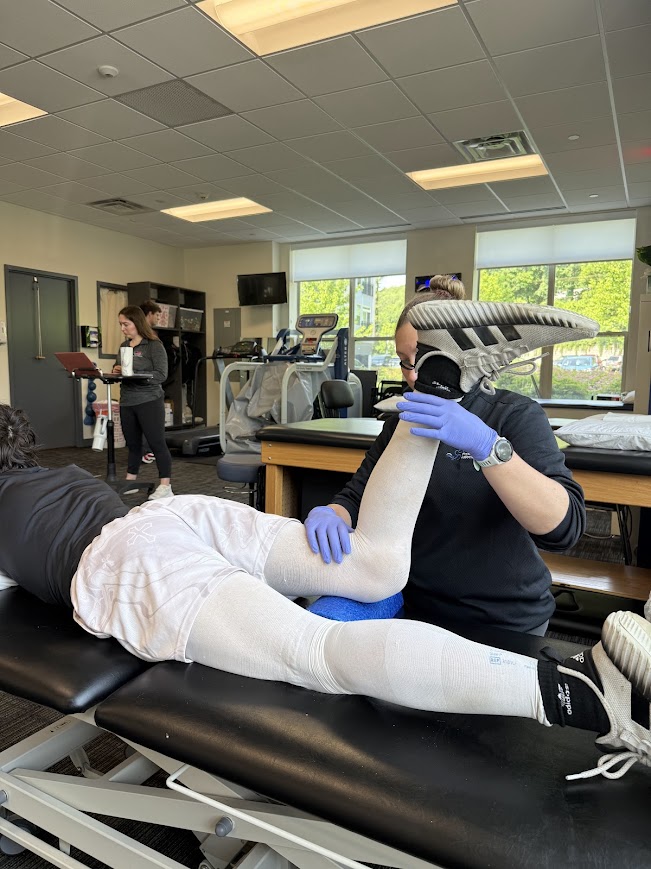
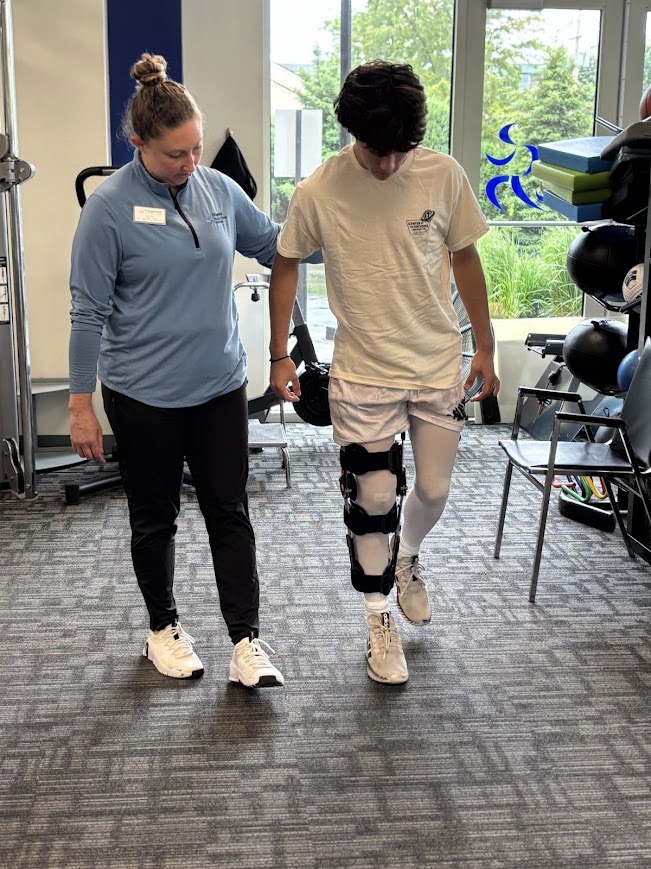
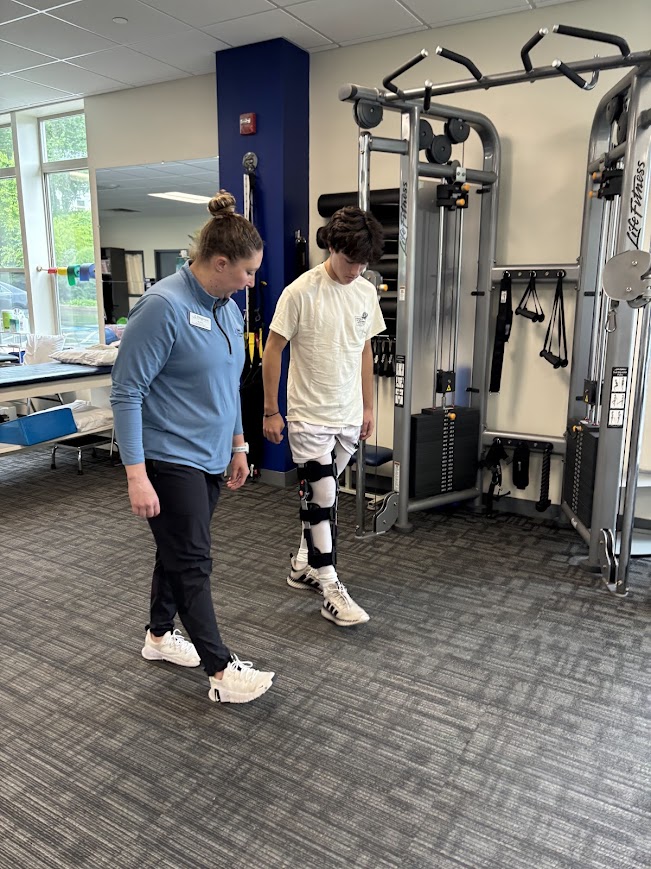
In physical therapy, Hunter’s sessions include:
- Quadriceps activation and strengthening
- Manual therapy for soft tissue and joint mobility
- Gait training without compensations
- Range of motion work as tolerated
- Adherence to his personalized post-op protocol
Every graft type (like Hunter’s quad tendon) has a unique rehab approach, and we tailor our care accordingly to ensure safe, steady progress.
Recovery is More Than Just the Knee
One key decision Hunter made? He returned to training with his strength & conditioning coach just 6 days after surgery—not for his knee, but for the rest of his body. Stopping all exercise during recovery can delay the healing process. Keeping the other three limbs strong sets the stage for a successful return.
Just as importantly, Hunter also attended his HS soccer team’s practice—not to play, but to stay mentally engaged, support the team, and stay socially connected. Recovery isn’t just physical. Staying connected can make a world of difference when you’re sidelined.
What’s Next? The Road to Return
Here’s a general timeline for ACL recovery milestones (varies slightly per patient and graft type):
- 0–2 weeks: Begin PT, wean off crutches, regain basic mobility
- 2–6 weeks: Improve range of motion, normal gait, light strengthening
- 8–12 weeks: Transition out of the brace, increase balance and strength
- 4–6 months: Begin return-to-run program
- 6–9+ months: Sport-specific training, clearance testing, return to play
Hunter’s story is a great reminder that the recovery process is just as important as the surgery. Early PT, whole-body conditioning, and mental resilience all play vital roles in getting athletes like Hunter back on the field safely.
If you or someone you know is facing an ACL injury, we’re here to help every step of the way—from day one through full return to play.
And stay tuned—we’ll keep you posted on Hunter’s progress as his healing journey continues.
